
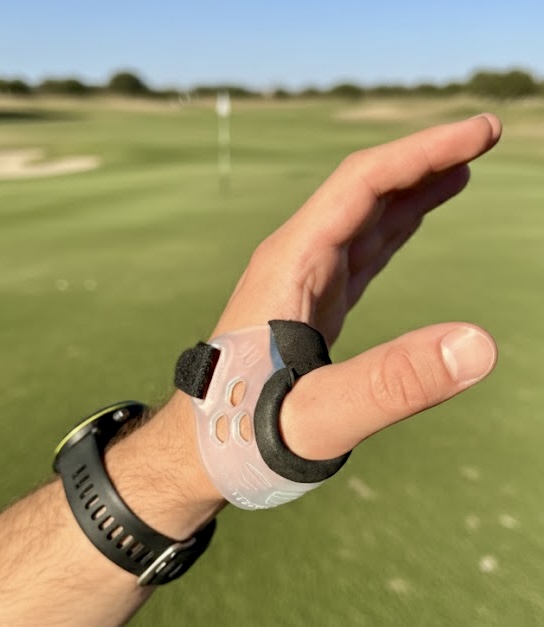
For many people, thumb pain doesn’t start as a major concern. It shows up quietly. A slight discomfort when opening a jar. A pinch of pain while turning a key. A moment of weakness when gripping something tightly.
Over time, those small moments add up.
Tasks that once felt automatic begin to require effort. For some, they become painful enough to avoid altogether.
This is often how CMC arthritis begins.
It is one of the most common forms of hand arthritis, especially among women. In fact, nearly one in three post-menopausal women experience CMC arthritis, making it a widespread but often under-addressed condition.
Despite how common it is, many patients still struggle to find a solution that actually fits their hand, supports their thumb, and allows them to keep living normally.
What Makes CMC Arthritis So Disruptive?
The Carpometacarpal (CMC) joint at the base of the thumb is the “main character” of hand function, but it carries a heavy burden. Unlike the other joints in your hand, the thumb CMC is a specialized saddle joint.
This unique “saddle-on-saddle” geometry is a masterpiece of evolution; it provides the internal rotation and wide range of motion required for true opposition—the ability to touch your thumb to your fingertips.This single mechanical feat is what allowed humans to develop the precision to use tools, write, and build civilization.
However, this extraordinary dexterity comes at a cost. To allow for such high mobility, the CMC joint sacrificed the rigid stability found in the rest of the hand. Because it acts as a constant fulcrum for every pinch, grip, and twist, it endures immense mechanical stress. When arthritis develops here, it doesn’t just cause a dull ache; it compromises the very mechanics that make the human hand unique.
When this “evolutionary hinge” begins to wear down, patients often experience:
- Sharp pain during high-pressure tasks like turning a key or opening a jar.
- Loss of the “Precision Pinch,” making it difficult to hold a pen or button a shirt.
- Weakness and Instability as the thumb loses its structural foundation.
- Increased discomfort triggered by cold weather or repetitive activity.
For clinicians, the goal is clear: reduce pain and stabilize this high-traffic joint to maintain functional independence. Because the thumb CMC is so mobile, the right support is vital.
Bracing is often the first step in management, but because of the joint’s complex saddle shape, not all braces deliver the same outcome.
Why Many CMC Braces Fall Short
Most traditional thumb bracing is built around standardized sizing: Small, medium, large.
But hands are not standardized.
Each patient has a unique thumb position, joint alignment, and degree of arthritis progression. When a brace does not match that anatomy, it creates friction instead of support.
Patients commonly report:
- Poor fit or pressure points
- Bulky designs that interfere with daily activities
- Heat and discomfort during extended wear
- Limited ability to use the hand naturally
As a result, many patients stop wearing their brace altogether, and a “one-size-fits-all” turns into a “one-size-fits-none”.
That gap between prescription and actual usage is where outcomes begin to decline.
A Different Approach to Thumb Support
The PROTECT3D CMC Brace was developed to solve that exact problem.
Instead of adapting the patient to the brace, the brace is designed around the patient.
Using a quick 3D scan, each brace is built to reflect the individual’s anatomy, thumb position, and clinical need. This creates a more precise and supportive fit while maintaining comfort during everyday use.
Dr Glenn Gaston, the Fellowship Director for OrthoCarolina Hand Center describes the impact clearly:
“Every patient with thumb arthritis has a unique thumb shape and position. Previously, it was one size fits few with over-the-counter options. Finally, we have a custom fit for everyone, the process is streamlined, and my patients and I are happy.”
This shift toward customization is not just about comfort. It directly influences how consistently patients wear the brace and how effective it becomes over time.

Designed for Real Life, Not Just Clinical Settings
One of the most important measures of any brace is whether patients can actually use it in their daily lives.
That is where many solutions fall short. They may provide support in theory, but limit real-world function.
The PROTECT3D CMC Brace is designed to support the thumb while allowing patients to continue their routines.
Patients have shared how that difference shows up in meaningful ways.
A 76-year-old veteran and avid golfer explained:
“This brace has freed me to hit the little white ball again.”
A 44-year-old piano teacher, who once struggled with severe flare-ups, shared:
“It has been amazing and I haven’t had to take any pain relievers. Before the CMC brace I was in immense pain, now I’m at a 0 or 1. When it was frigid or rainy, either factor wouldn’t let me play the piano but now even with both factors I’m perfectly fine.”
A 63-year-old dental hygienist highlighted how it fits into her workday:
“I can perform my tasks with the brace under my exam gloves with no pain and no issues.”
These are not edge cases. They represent what happens when a brace aligns with both anatomy and lifestyle.
Built on Experience From High-Performance Environments
PROTECT3D has spent years designing custom braces for professional athletes, where precision, comfort, and durability are essential.
That same level of design thinking now applies to everyday patients.
The CMC Brace uses:
- Advanced 3D printing technology
- Lightweight, durable materials
- A breathable structure that supports long-term wear
The result is a brace that feels less like a limitation and more like a support system.
What This Means for Clinicians
For hand and wrist specialists, the shift toward custom bracing introduces a more reliable way to support patients with CMC arthritis.
It offers:
- A streamlined digital workflow using 3D scanning
- A consistent and repeatable fit
- Improved patient compliance
- A non-invasive option that can delay surgical pathways
It also changes the conversation with patients. Instead of managing expectations around discomfort, clinicians can offer a solution designed to integrate into daily life.
A Better Standard for CMC Arthritis Care
CMC arthritis may be common, but that does not mean patients should settle for generic solutions. As healthcare continues to move toward personalized treatment, bracing is evolving alongside it. Custom 3D-printed solutions represent a shift toward care that is more precise, more wearable, and more aligned with how people actually live.
Learn More About the PROTECT3D CMC Brace
If you or your patient is experiencing thumb pain related to CMC arthritis, a custom-fit brace may provide the support needed to restore comfort and function.
Speak with your provider about PROTECT3D or explore how this technology is changing the standard for thumb arthritis care. Reach out to us today from more information!